The Quiet Gap Between Tracks
The quiet gap between tracks can help a listener hear an ending before moving on. Choose a pause that suits the music, the room, and your mood.
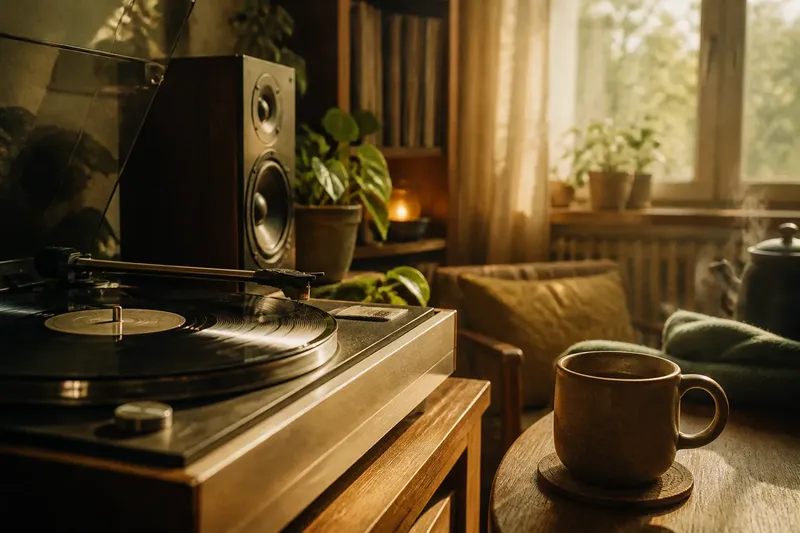
The quiet gap between tracks can be the moment a song’s last note stops belonging to the speakers and starts belonging to the room. On a phone, that moment may be swallowed by an eager queue; on a turntable, it may stretch while you decide whether to lift the stylus or let the next side wait. A pause is not empty by default. It is a small choice about how one piece ends and another begins.
There are three useful ways to handle it: let the playback system move on, pause deliberately, or allow a longer interval for a change in attention. None is inherently more attentive. The right option depends on what the recording is doing, how you are listening, and whether anyone else is in the room.
What does the quiet gap between tracks let you hear?
A gap gives a musical ending somewhere to land. A final chord may decay gradually; a sharply cut-off sound may leave a different kind of afterimage. If the next track begins at once, the two pieces can seem joined, which may be the intended effect. If they are separated by a breath of silence, the first ending becomes easier to notice as an ending.
That distinction is not a matter of reverence. Some albums are sequenced to run together, and a pause can interrupt a transition. Other recordings place distinct pieces side by side, where an unhurried interval makes the change in mood more legible. Listen for what the track itself seems to ask: does its final sound invite continuation, or does it settle?
The gap also reveals ordinary room sounds. A radiator clicks; a chair shifts; someone sets down a mug. These sounds do not spoil listening. They remind you that playback has ended while the room continues. That can be useful when music has filled the space so completely that you have stopped noticing your own attention.
Which approach suits the way you listen?
Should you let tracks run straight into one another?
Automatic playback suits continuous mixes, dance music, radio-style listening, and any session where momentum matters more than separating each ending. It also works well when you are occupied with cooking or walking and do not want to turn track boundaries into small administrative tasks. If the sequence is designed around an uninterrupted handoff, adding silence may make the transition feel oddly formal.
Is a brief manual pause useful?
A short pause suits attentive listening to an album of distinct pieces, especially when one track ends quietly or resolves in a way you want to register. You can stop the player after the sound fades, take a breath, then continue when you are ready. The point is not to wait for a prescribed interval; it is to hear the close before asking for the next thing.
When does a longer break make sense?
A longer interval is useful when the next track changes the emotional or practical setting: a side ends, a record needs attention, or the people listening want to talk. It also suits a session in which you have noticed that every ending triggers an automatic skip. Step away from the controls and let the music’s absence become part of the room for a while.
What if silence makes the room feel awkward?
Awkwardness may mean the pause is too long for the setting, or simply that conversation has not found its next subject. You can resume playback without turning the interval into a test of concentration. Shared listening does not require everyone to sit solemnly through the air conditioner.
How can you make a pause without turning it into a ritual?
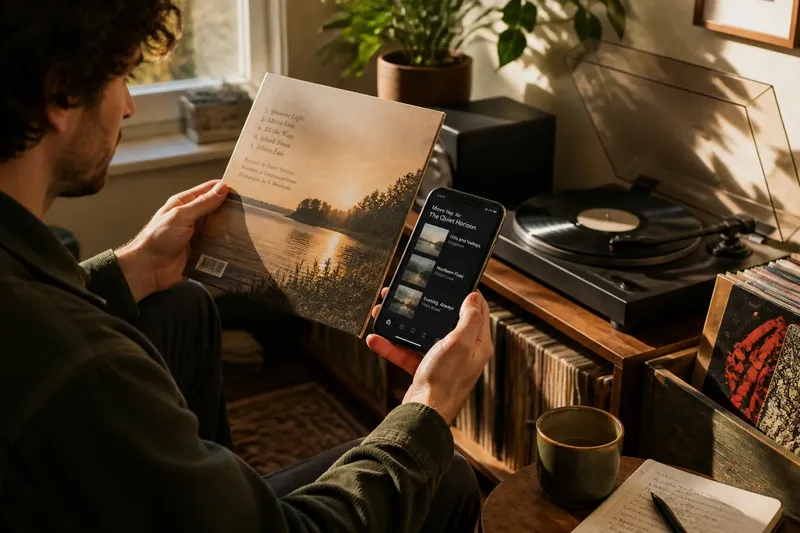
Keep the action simple. With a streaming app, use pause rather than skipping ahead to inspect the queue. With a CD player, let the track finish before reaching for the controls. With a turntable, a side break already creates a natural decision point; you need not manufacture another one after every song.
Notice one concrete feature before moving on: the last sound, the way it faded, or the contrast you expect from the next track. One observation is enough. Naming several details can turn listening into note-taking, which is a respectable hobby but not mandatory equipment.
Say you are listening to a quiet acoustic track while making tea, and its final chord fades beneath the kettle’s low hiss. You might leave the player paused, set down the mug, and notice that the chord has ended while the kettle has not. Then you can start the next track. The observable result is modest: the transition feels like a choice rather than an automatic continuation. If the kettle boils over, the listening exercise has acquired a different ending.
How should you choose a gap for different listening settings?
For solo listening, choose based on the music’s shape. A tightly connected sequence can run on; a track with a clear, delicate ending may benefit from a pause. In headphones, silence often means only that the signal has stopped. In a room with speakers, the decay and the surrounding sounds remain audible, so even a brief interval can feel more substantial.
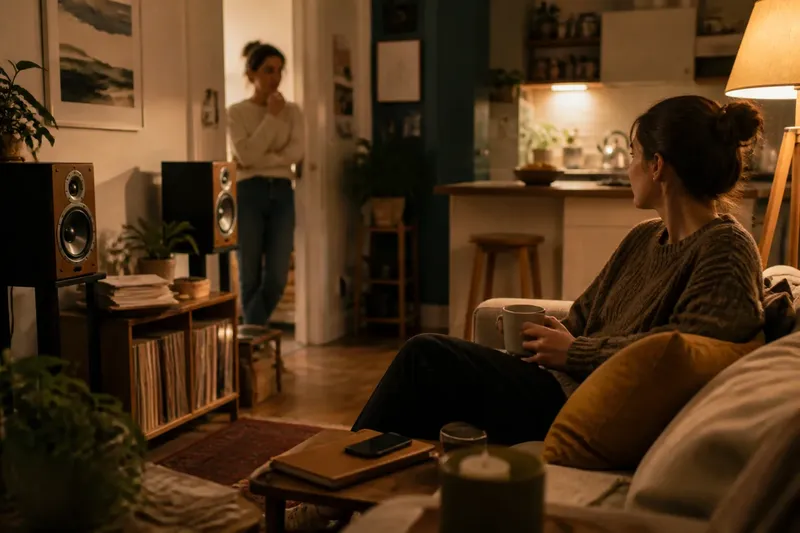
For shared listening, take your cue from the people present rather than appointing yourself keeper of the silence. If someone begins speaking as a song ends, the moment may be better served by conversation. If the room stays attentive, a short pause can let the ending register without requiring anyone to explain what they heard.
For background music, continuous playback is often the sensible choice. Music may be accompanying a task rather than receiving undivided attention, and interrupting that task to honor every track boundary can be more ceremony than anyone requested. The pause is most useful when it answers a real listening need, not when it becomes a rule.
What should you do when tracks are meant to connect?
Some recordings use a transition that carries sound across the boundary: a lingering note, a room tone, or a sudden entrance that completes the previous piece. In that case, listen through the join before deciding whether to pause. A break imposed between linked tracks can remove information just as surely as skipping the final seconds.
When you do not know whether a transition matters, try listening to the sequence once without interruption, then decide on a later listen whether a pause would help. This is not a demand to replay an album until it yields a verdict. It is a way to separate the recording’s own pacing from the habit of tapping “next” as soon as a track appears to be over.
How do you know when the pause has done its job?
You have heard the ending, noticed the room, or made a conscious decision to continue. That is enough. The quiet gap between tracks need not be long, profound, or reliably peaceful. Sometimes it is a single breath; sometimes it is the time it takes to find the play button without looking. Treat it as available space, not a performance standard.
For a connected sequence, keep the sound moving. For a distinct ending, try a brief pause. For a change in attention or company, let the break widen. The useful habit is simply to notice that the next track does not have to begin the instant the previous one stops.